Board & set sail
- Arrival at Port Pasikuda; boarding 15:00–15:50.
- The yacht departs by 16:00.
- Check dive / snorkel opportunity on board (night dive optional).
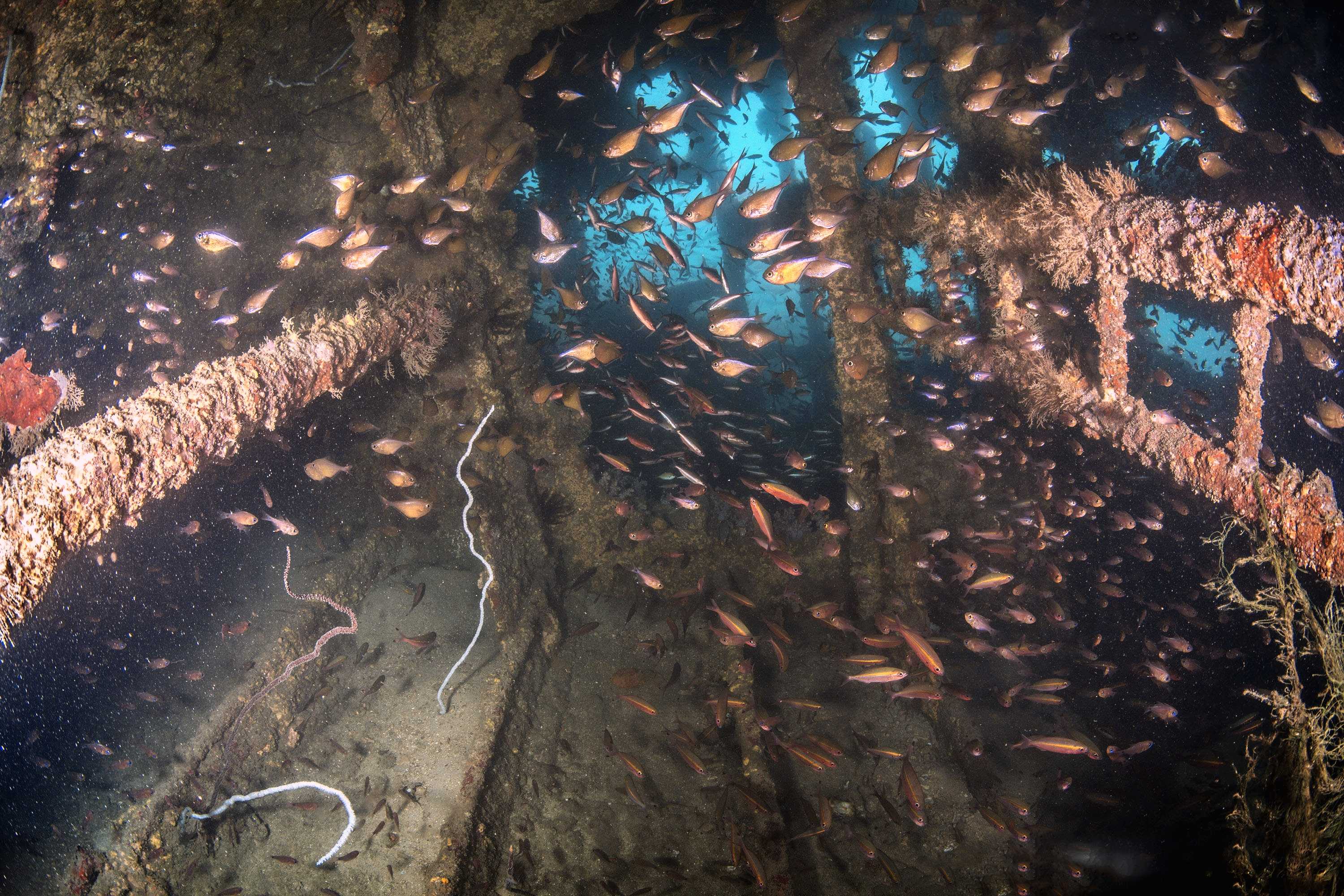
A century of shipwrecks, 1864 to 1942, scattered across the shallow shoals of the East Coast, plus a marine sanctuary teeming with life.
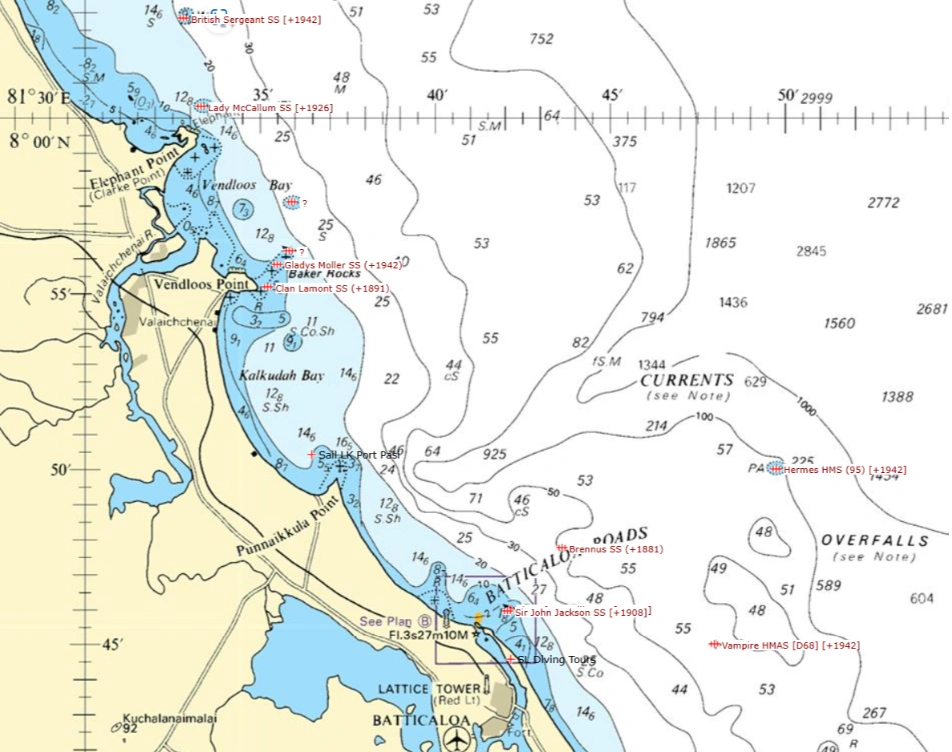
At the heart of it lie the Brennus Shoal Wrecks — the scattered remains of three ships at a depth of 9 m. The author of “Ghosts of the Deep” has identified two as the SS Brennus and the SS Sir John Jackson. The Brennus ran aground on 7 July 1881, prompting an update to the admiralty charts; the Sir John ran aground on 26 September 1908 following bad weather, low on coal and without the latest charts.
Trace the route — tap any marker to open its log.
East Coast of Ceylon
Wreck Chart · Chart N°06
Port and dive-site positions are approximate — not for navigation. Coastline © OpenStreetMap contributors.
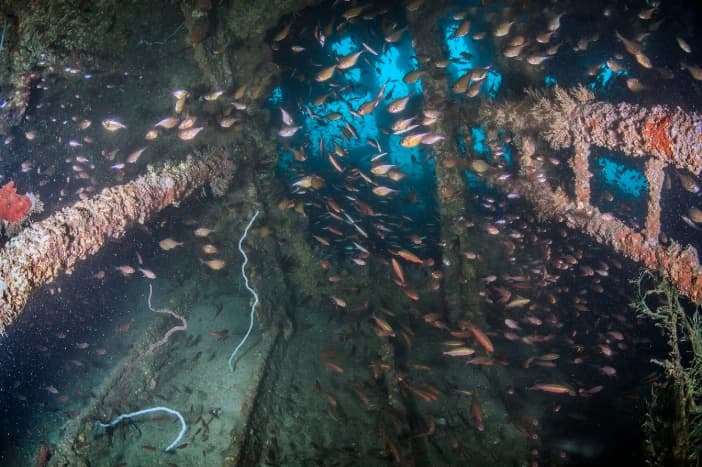
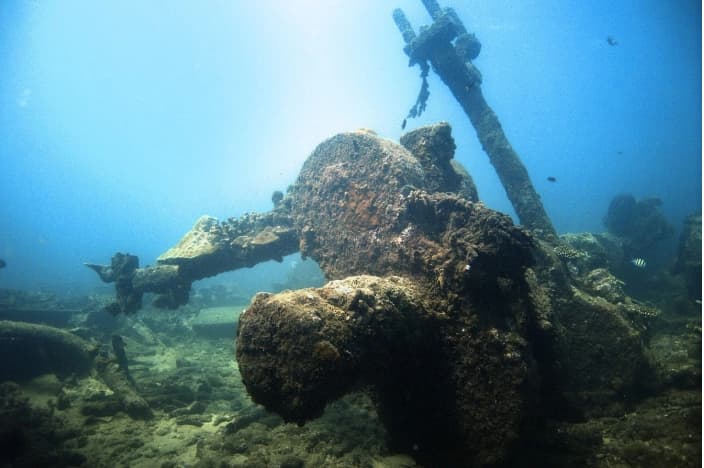
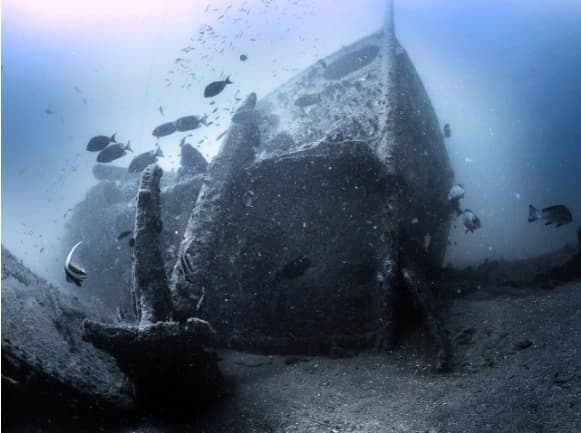
While on a voyage from Kalkudah to Trincomalee, the British SS Lady McCallum passenger/cargo ship struck a reef and sank at a depth of 10 m on 1 January 1926. It is assumed she met her fate navigating in bad weather and poor visibility during the monsoon.
The bow with anchor, the boilers and the stern with more anchors are highlights of the dive, though she is in total decay. The site is good for a training dive, with visibility varying between 2 m and 6 m due to the outflow of the lagoon.
Photography: Dharshana Jayawardena
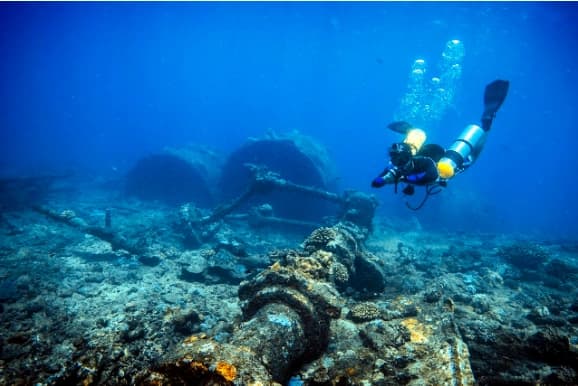
An ideal post-Hermes dive, the Brennus was en route to London from Vizagapatam, Madras, when she ran aground a few miles off Batticaloa on a shoal of shallow rocks. The captain had no idea of a shoal in the vicinity — henceforth known as Brennus Shoal.
The four large boilers, close together in almost perfect formation, and a long shaft — presumably the crankshaft — ending in a magnificent propeller are but a few highlights of the dive.
Photography: Dharshana Jayawardena
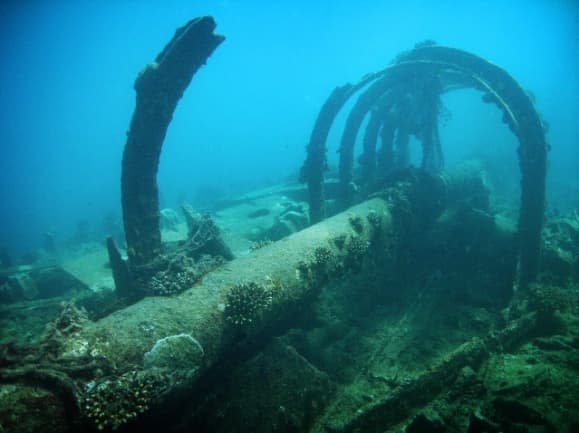
A few metres north-east of the SS Brennus lies the Sir John Jackson, very similar in many ways. The shallow waters and fierce monsoons have reduced these massive ships to a jumble of debris over a large area.
Three boilers, parts of the engine, the propeller shaft and propeller are some of the highlights. It's a great dive for divers of all calibre, and one of the top dive sites in Sri Lanka.
Photography: Dharshana Jayawardena
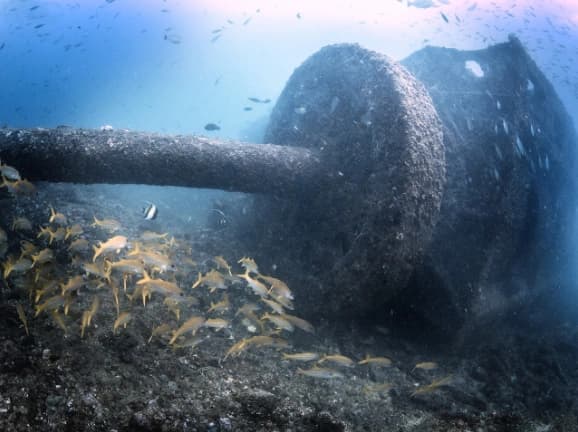
Trying to avoid a collision with another ship, she hit submerged rocks named the Alphée Shoal. The French imperial steamship Alphée was the first to hit these rocks on 10 July 1864; many others would follow, though notice was immediately issued.
At a depth of 12 m, this large wreck is scattered by the pounding waters over a large area. It is an adventure for the wreck enthusiast.
Photography: Dharshana Jayawardena
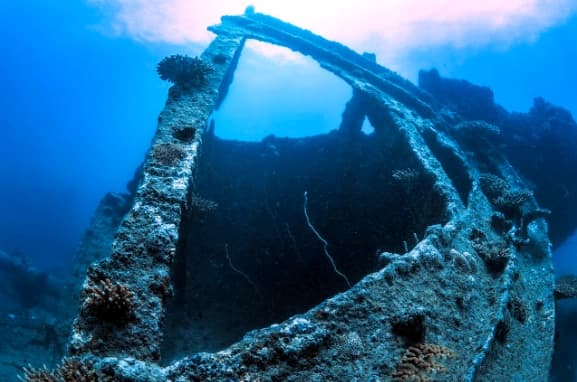
Scattered remains of possibly three to four ships at a depth between 4 m and 12 m, approximately 3 km east of Pasikudah. The author of 'Ghosts of the Deep' has identified one wreck as the SS Gladys Moller, while presuming the other two to be the SS Amaryllis and the SS Clan Lamont.
Photography: Dharshana Jayawardena
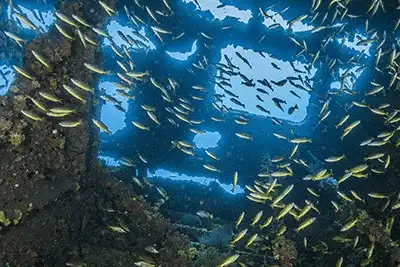
This massive tanker is a great dive for all levels. The shipwreck met her fate at the hands of the Japanese and lies at 24 m, in two parts — probably from breaking up as she sank.
The bow and stern areas can be clearly distinguished. The highlight is the massive cavern amidship, and another at the start of the aft which, from inside, looks like a cathedral.
Photography: Dharshana Jayawardena
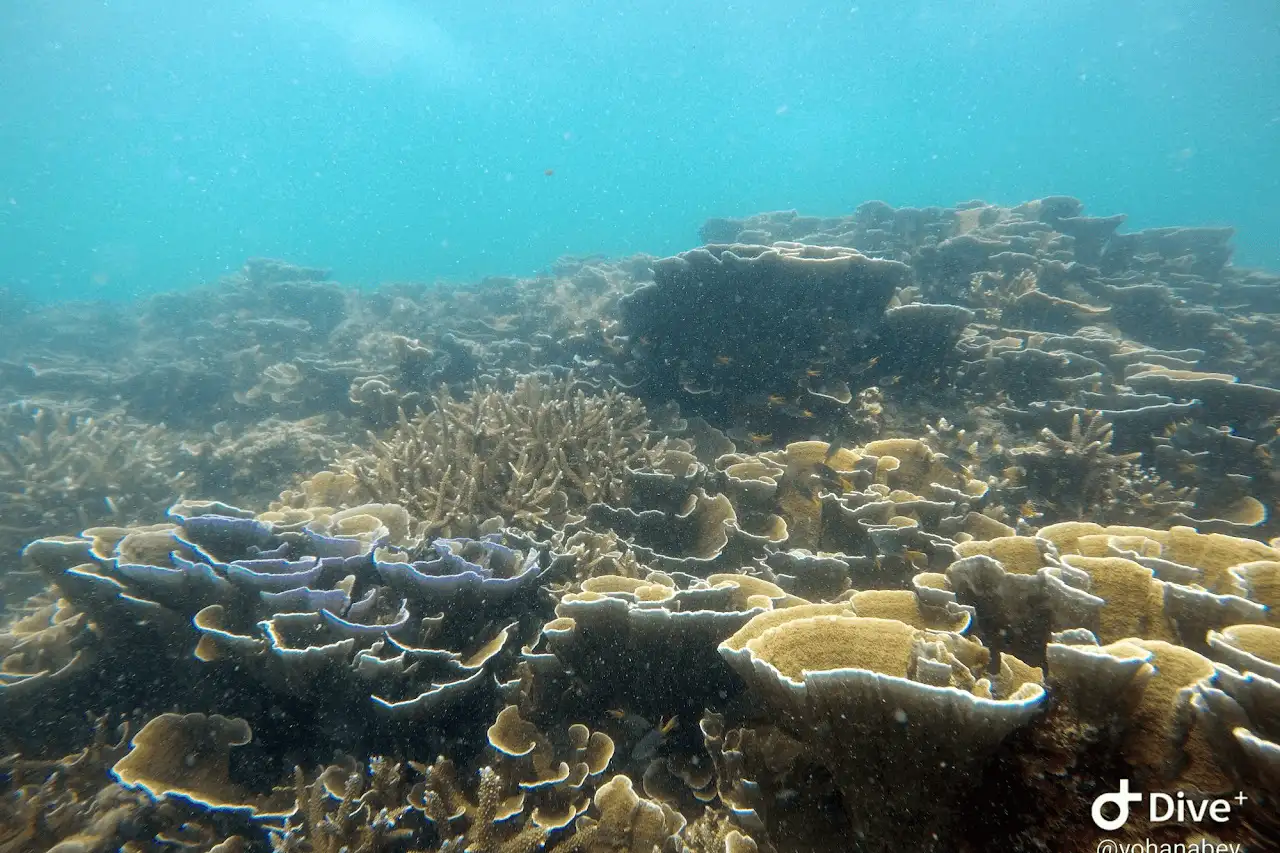
Located off Kalkudah, Kayankerni is home to high diversity — amazing coral gardens of lettuce and table corals, and an abundance of marine life, with over 200 species of fish observed to date.
The reef was declared a protected site and named the 18th Marine Sanctuary of Sri Lanka in 2019. This shallow reef is perfect for all levels — and for the experienced, small swim-throughs reveal its varied topography.
Dive highlights include moray eels, lionfish, groupers, snappers, wrasses, parrotfish and surgeonfish, to name a few.
Photography: Yohan Abeyesekera
Experience required